The 50-30-20 rule: a simple way to split your salary
Split your pay into needs, wants, and savings
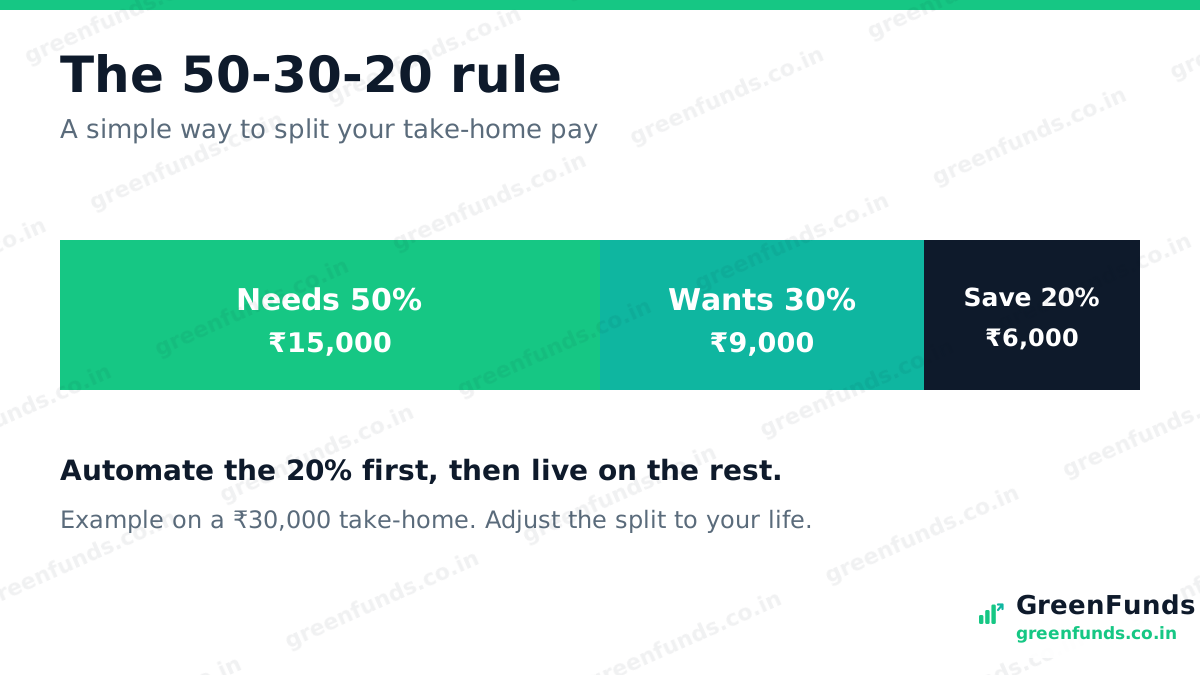
The idea. The 50-30-20 rule is a simple way to split your take-home pay: 50% on needs, 30% on wants, and 20% on saving and investing. It is a starting point to bring order to your money, not a strict rule.
Did you know? This is not an official Indian rule or an RBI guideline. It was popularised by Elizabeth Warren, a US law professor at the time, and her daughter Amelia Warren Tyagi in their mid-2000s book All Your Worth. That is why you should treat it as a flexible guide, not law, and bend the percentages to fit Indian costs and your own salary.
A rupee example. Say your take-home is ₹30,000 a month. That is ₹15,000 for needs, ₹9,000 for wants, and ₹6,000 to save and invest. The split is an illustration, so treat it as a guide, not a target you must hit.
What counts as what. Needs are the things you cannot skip: rent, food, bills, transport, and any EMI. Wants are the nice-to-haves: eating out, subscriptions, shopping. The last slice is your emergency fund first, then a SIP or other goals.
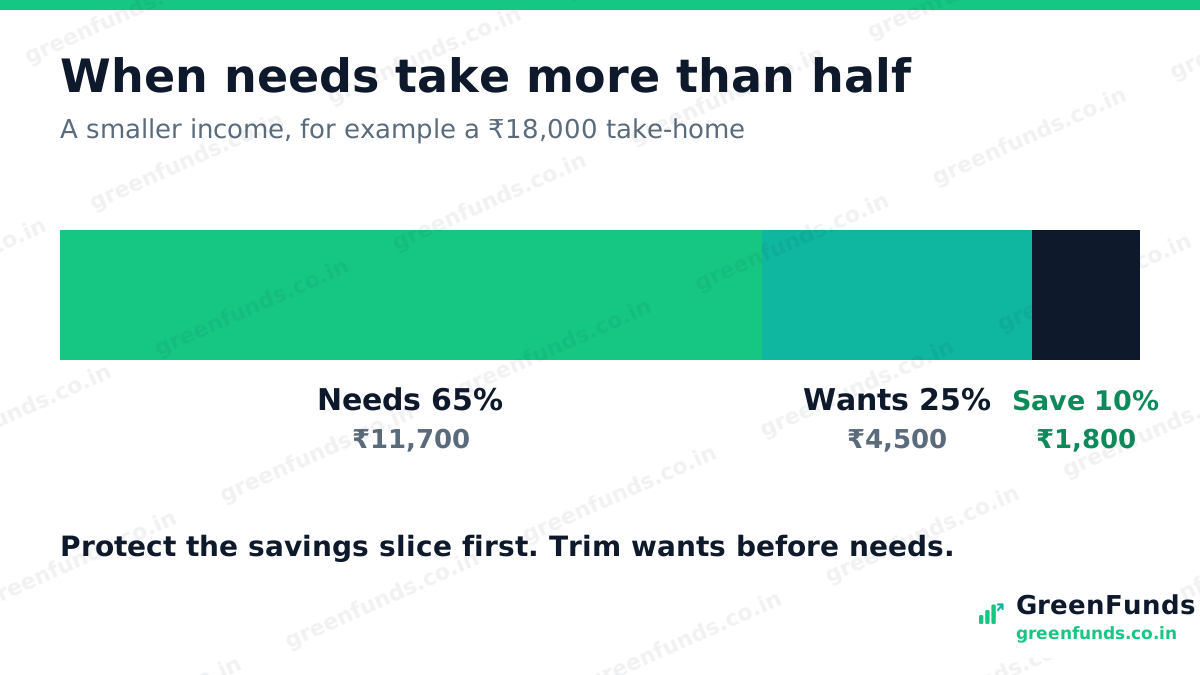
If your needs are more than half. On a smaller income in India, needs often take more than 50%, and that is normal. Flip the plan: protect the savings slice first, even if it starts at 10%, and trim wants before needs. The exact percentages matter less than paying yourself first.
How to actually do it. Automate it. On payday, move the savings slice out first, into a separate account or a SIP, before you spend on anything else. Then live on what is left. What you do not see, you tend not to spend. To see what that savings slice can grow into over 10, 20 and 30 years, read how to build wealth.
New to this? Start with the basics on the learn page.
Questions people ask
What is the 50-30-20 rule?
A simple budgeting guideline: spend about 50% of your take-home pay on needs, 30% on wants, and save or invest 20%. It is a starting point, not a strict rule.
Does the 50-30-20 rule work on a low salary in India?
Often needs take more than 50% on a lower income, which is normal. Keep the idea, pay yourself first, and adjust the percentages. Even saving 10% to start is better than nothing.
How do I start the 50-30-20 budget?
Automate it. On payday, move your savings slice out first to a separate account or a SIP, then live on the rest.
Source: 50-30-20 is a widely used budgeting guideline, not an official rule.
Found this useful? You can buy us a coffee. It keeps GreenFunds free.Flag a possible issue
Was this helpful?
Thanks for the signal.
Comments
Share your experience or a question. Be kind, stay on topic. This is reader discussion, not financial advice.
No comments yet. Be the first to share.