Tracking your spending and your net worth
Two numbers tell you where your money goes and where you stand
Figures checked 2026-11-03
Two numbers tell you most of what you need to know about your money. The first is what you spend each month, broken into a few groups. The second is your net worth: everything you own minus everything you owe. One shows where money goes. The other shows where you stand.
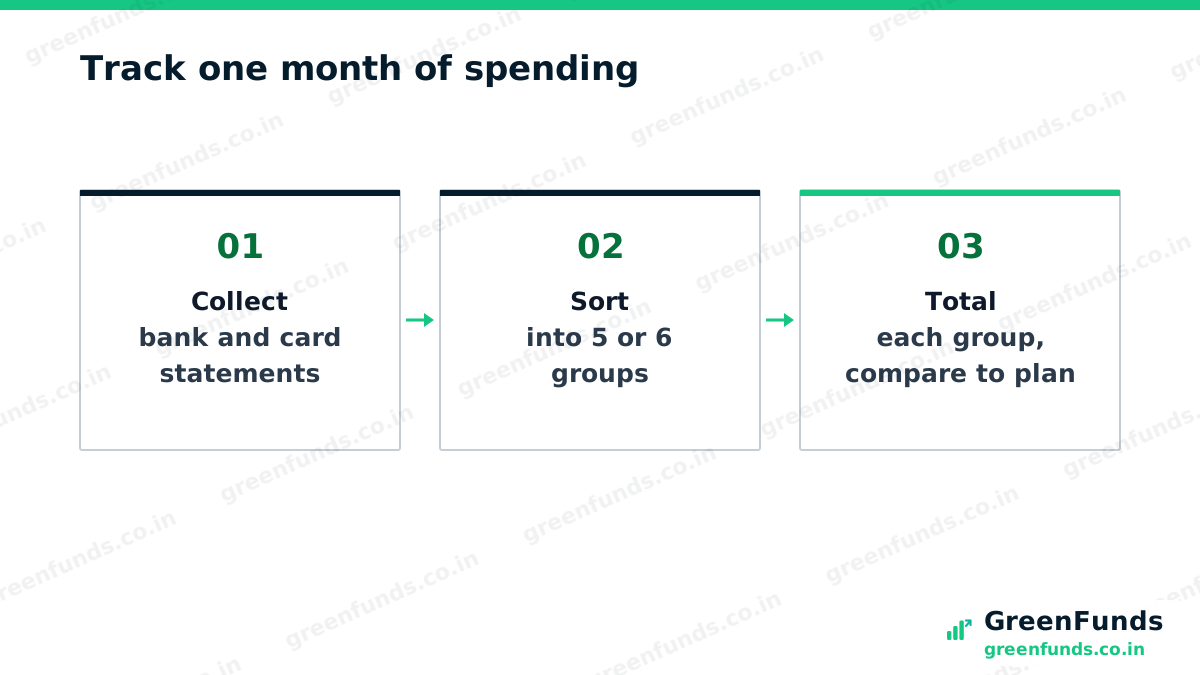
Step 1: track one month of spending. Pull up last month’s bank and card statements. Put every spend into five or six groups: rent, food, travel, bills, EMIs and fun. Total each group. Most people are surprised by one of them, and that one is usually where the easiest savings are.
You don’t need a perfect system. A notebook or a simple sheet works. What matters is seeing real totals instead of guesses, then comparing them with a plan like the 50-30-20 budget.
Did you know? RBI rules require banks to ask every customer to register for SMS alerts on electronic transactions, and the alerts must be sent. That means your phone already holds a running log of most of your spending. Scrolling through a month of those messages is a quick way to start.
Step 2: work out your net worth. List what you own: savings, fixed deposits, your EPF balance and investments. Then list what you owe: card dues, loans and anything borrowed from family. Subtract the second total from the first.
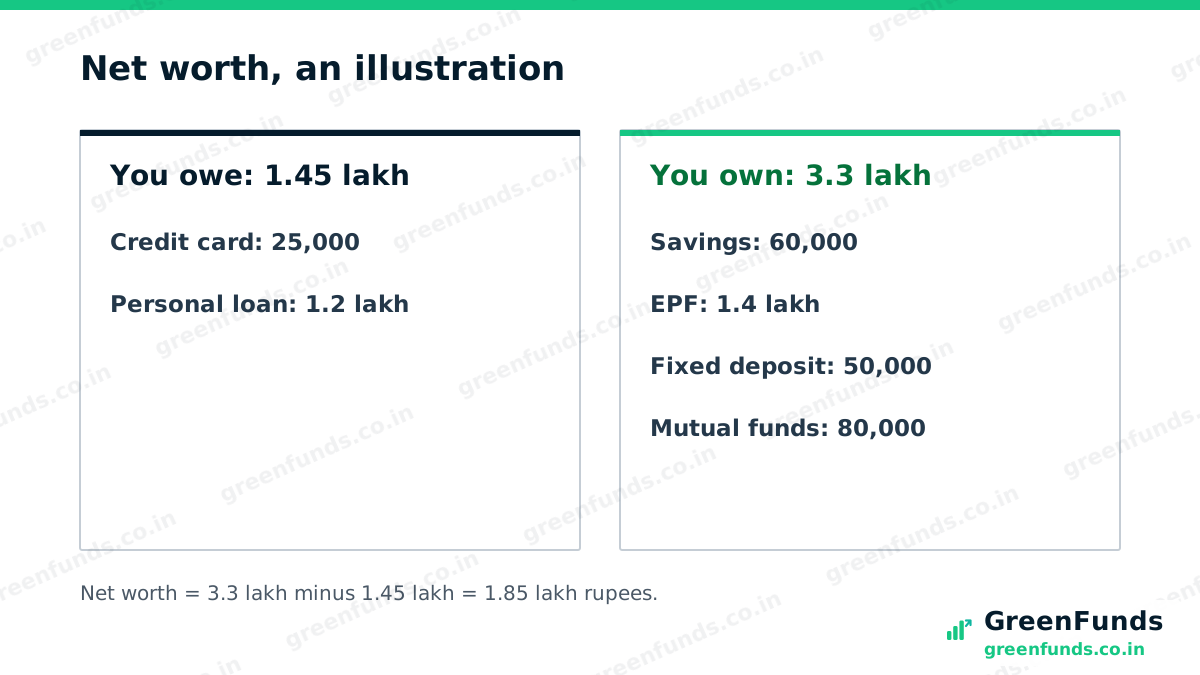
An illustration. Say you have 60,000 rupees in savings, 1.4 lakh in EPF, a 50,000 rupee FD and 80,000 in mutual funds. That’s 3.3 lakh rupees you own. You owe 25,000 on a credit card and 1.2 lakh on a personal loan, so 1.45 lakh you owe. Your net worth is 1.85 lakh rupees.
Don’t panic if it’s negative. An education loan early in your career can push net worth below zero. That’s common. What you want is the direction: a number that rises a little each quarter means your system is working.
What to watch over time. Write your net worth down on the same date every three or six months. If it isn’t rising, your spending groups will usually show why: a habit that crept up, or a debt that’s growing faster than you’re paying it. Paying off high-interest debt lifts net worth just as surely as saving does.
The takeaway. Track one month of spending to see where your money goes, then work out your net worth to see where you stand. Check spending monthly and net worth a few times a year. The trend, not the single number, tells you whether you’re getting ahead.
More to read: needs vs wants, the emergency fund, and paying yourself first.
Questions people ask
What is net worth?
Net worth is everything you own minus everything you owe. Add up your savings, deposits, EPF, investments and anything else of value, then subtract loans, card dues and other debts. The result can be negative early on, especially with an education loan, and that's normal.
How do I start tracking my spending?
Start with your bank and card statements for the last month. Put each spend into a few simple groups, such as rent, food, travel, bills, EMIs and fun. You don't need an app: the point is to see the real totals once, then check them every month.
How often should I check my net worth?
Once every few months is plenty. Your spending changes every week, but net worth moves slowly. Writing it down on the same date each quarter or year shows you the trend, which matters more than any single number.
Should I count my house or car in my net worth?
You can, at a realistic resale value, but many people also track a second figure without them. A car loses value every year, and you can't spend your own home. A figure built from savings, investments and debts shows the money you can actually use.
Flag a possible issue
Sources
- RBI, Customer Protection: Limiting Liability of Customers in Unauthorised Electronic Banking Transactions, 6 July 2017 (RBI/2017-18/15), paragraph 5 Banks must ask customers to mandatorily register for SMS alerts for electronic banking transactions, and SMS alerts must be sent.